

Most sellers spend their pre-sale budget on minor repairs and paint. But by the time a buyer has decided whether they like your freshly painted kitchen, they have already decided whether they like your house. That decision is made outside, on the way from the car to the front door. This guide is about the outdoor upgrades that make the difference between a home that photographs well and shows well, and one that does not.
What to spend on before you list, what to leave alone, and how estate agents, buyers and Irish weather all shape the answer. Written for homeowners planning to sell, and for the trade who help them get there.
Before you list a home in Ireland, spend outdoors in this order: (1) the driveway, because it is the largest visible surface and the one buyers judge first; (2) the front path and threshold, the eight-second first impression on a viewing; (3) kerbs, edges and boundary walls, which frame everything else; (4) lighting and small finishing details. Skip elaborate landscaping and anything the next owner is likely to change. Start six months before listing if you are replacing paving, three months for cleaning and refresh, and one week for photo-day polish.
Most sellers spend their pre-sale budget on the kitchen and the paint. Both matter. But by the time a buyer has decided whether they like your kitchen, they have already decided whether they like your house. That decision is made outside, on the way from the car to the front door.
Estate agents call this kerb appeal. Buyers don’t call it anything, because it isn’t conscious. They just know. This guide is about the outdoor upgrades that make the difference between a home that photographs well and shows well, and one that does not. It is written for homeowners about to sell, and for the merchants and contractors who help them get the outside in shape in time.
We make paving in Kingscourt, Co. Cavan, and we guarantee the structural integrity of our residential paving blocks for 25 years. So we have skin in this game. But the honest answer is that some of the upgrades that add most value cost very little. The trick is knowing which ones.
1. Why outdoor matters more than most sellers realise
Roughly eight in ten Irish buyers see a property online first. The listing photo of the front elevation is the single most important image in the whole set, because it is the one the buyer sees on Daft.ie or MyHome.ie before they decide whether to click. If that photo is not good, the click never happens.
Then, if they do click, the first physical experience of the house is the walk from the road or the parking spot to the front door. That walk takes about eight seconds. In those eight seconds, a buyer takes in the driveway, the path, the front garden, the kerbing, the door itself, and the general sense of whether the house has been looked after. It is a lot of information, and it is largely subconscious.
A home with tired paving, weeds in the joints, and a mossy front step tells a buyer that maintenance has been let slip. Whether that is true or not, the impression is set before they walk in. Fixing the outside is the highest-leverage pre-sale spend you can make, because the whole viewing starts on the front step.
What estate agents say
Ask any experienced Irish estate agent what they wish sellers would do before listing, and outdoor comes up first. The listing photograph. The condition of the driveway. Whether the front garden is tidy. Whether the paving looks like a black-and-white photograph. A better front photo brings more clicks, more viewings, and more competing offers.
2. The upgrades ranked by return on effort
Not every outdoor upgrade pays back the same way. Below is a working ranking, from highest return per euro spent to lowest, based on what makes a difference in the listing photograph and in the eight-second walk.
| Priority | Upgrade | Why it pays back |
|---|---|---|
| 1 | Driveway resurface or replacement | Biggest visible surface. Sets the tone for the whole front elevation. Turns a tired listing photo into a confident one. |
| 2 | Front path and threshold | Directs the eye and the feet to the door. Small footprint, big psychological weight. |
| 3 | Kerbs, edges and boundary walls | Frame the property. Neat edges signal a well-cared-for home even before anyone looks at what is inside them. |
| 4 | Front garden tidy and paving cleaning | Cheapest fix, immediate visual return. Weed the joints, re-sand, pressure wash on low, cut back overgrowth. |
| 5 | Lighting and finishing details | House number, letterbox, uplighters or bollards. Small spend, disproportionate impact on evening photos and viewings. |
| 6 | Front door and windows repaint | Often overrated, but genuinely valuable if the current paint is failing. Do it, don’t overthink it. |
| 7 | Bin store or oil-tank screen | Removes a negative. Buyers subconsciously mark down anything ugly in the front elevation. |
| 8 | Elaborate new landscaping | Don’t. Most buyers rip it out or ignore it. Spend the money on the driveway or the path. |
3. The driveway: the biggest lever you have
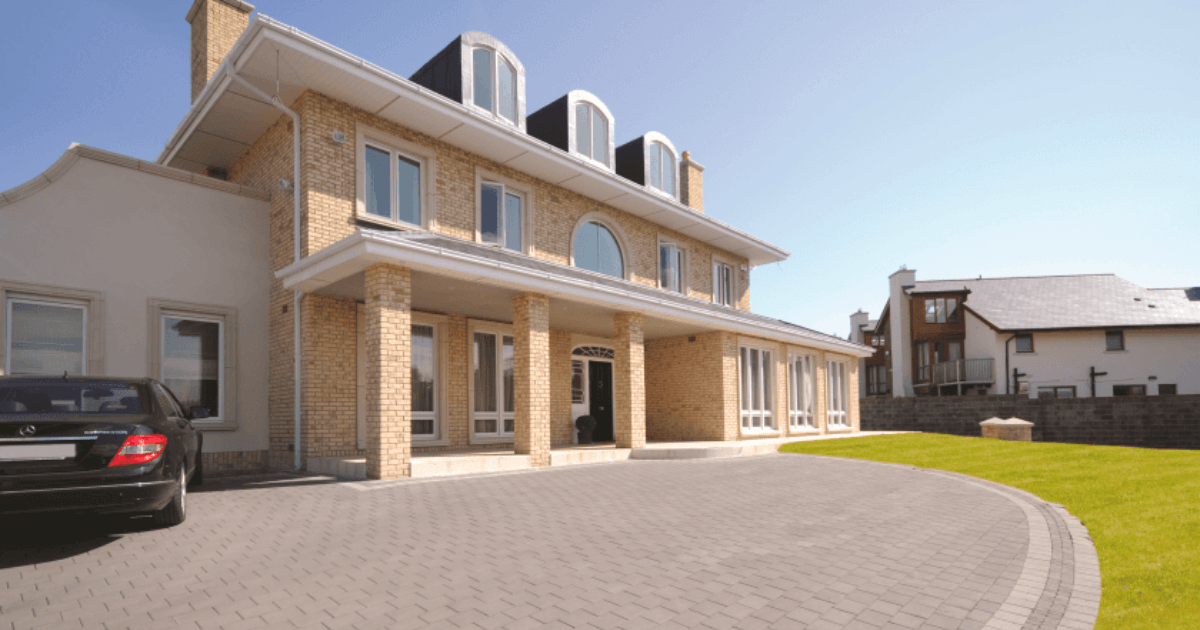
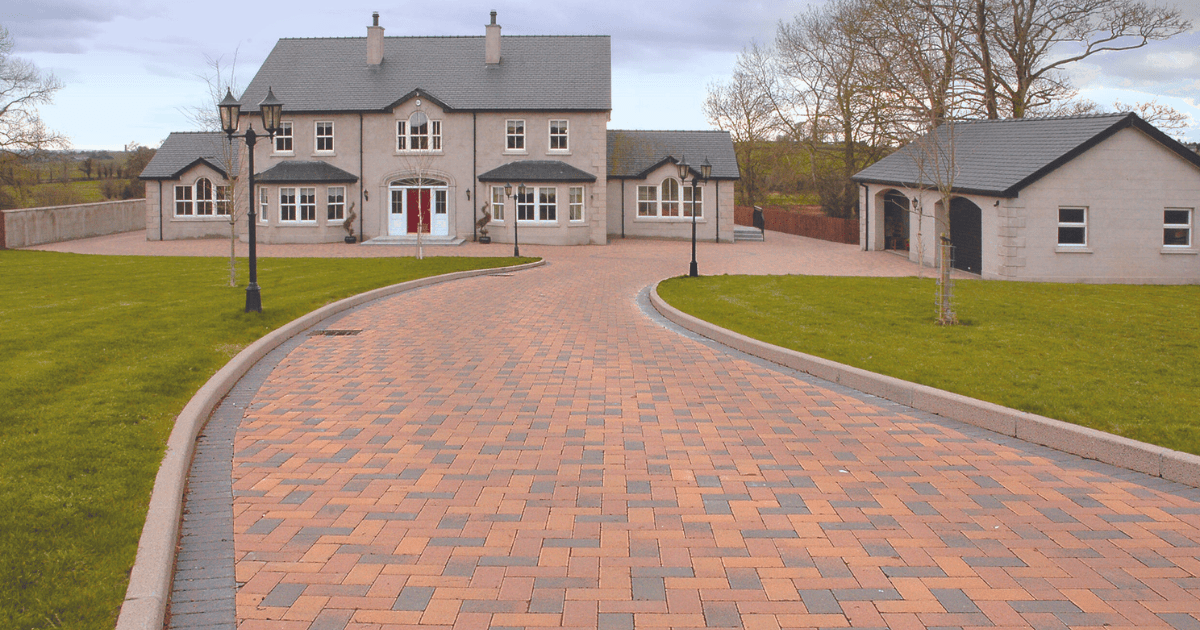
The driveway is the single largest visible outdoor surface on most Irish homes. It is also the first thing photographed for a listing and the first thing a buyer stands on when they arrive. If it is tired, so is the impression.
There are three levels of intervention, depending on your budget and how long you have before listing.

Option A: Refresh only
Clean, re-sand the joints, replace broken blocks, and seal if the surface is oxidised. Suitable for a driveway that is structurally sound but visually neglected. Cost is modest. Time from start to photo-ready is one to two weeks.
Option B: Overlay or partial replacement
Suitable when the paving is worn or mismatched but the sub-base underneath is still in good shape. Overlay with a fresh, better-specified paving in a colour that suits the house. Time from start to photo-ready is around three to six weeks, including planning and installation.
Option C: Full replacement
The right answer when the driveway is failing, sinking, or so dated that no amount of cleaning will help. Also the right answer when the current surface is gravel or asphalt, and you want to trade up. Time from start to photo-ready is typically six to twelve weeks, including planning, ordering and installation. Start early.
For the material and pattern decision itself, see the companion cornerstone guide, ‘The complete guide to choosing driveway paving in Ireland’. In short: cobbled paving suits older, brick-and-stone homes; smooth paving suits contemporary render-and-anthracite builds; granite is the premium finish; permeable is required or advisable where planning conditions demand it.
How much value does a new driveway actually add?
There is no single number, because it depends on the house, the location and the standard of the finish. What is consistent, in our experience and in the numbers that Irish and UK estate agents report, is that a good driveway pays back more than most homeowners expect, and a bad one is priced in against you whether you realise it or not. It moves the listing price, the number of viewings, and the number of competing offers.
4. The front path and threshold
The path from the gate or driveway to the front door is a small piece of the property but a big part of the viewing. It is where a buyer walks slowly, takes in the house, and forms an opinion. It rewards a bit of design attention.
A well-considered front path does three things. It reads as intentional, not accidental. It ties visually to the paving on the driveway and to the elevation of the house. And it ends at a threshold plinth or step that gives the door a moment of arrival.

Practical options
- Pattern the path with the driveway. A stretcher bond in the same paving colour, or a border of setts around a field of flags, ties the two together without repeating exactly.
- Replace a broken concrete slab path with paving blocks, flagstones or porcelain, matched to the elevation.
- Add a threshold plinth. A granite or porcelain step in front of the door is a small piece of hardscape that lifts the entrance every day of the year.
- Straight is not always the answer. A gentle curve towards the door reads more welcoming than a runway. Curve it if the front garden allows.
5. Kerbs, edges and boundary walls
Kerbing is the quiet detail that makes everything look considered. A driveway without a clear edge looks as if it has bled into the lawn. A garden without a defined boundary looks as if it has spilt into the neighbours.
For most Irish homes, the useful moves are:
- Kerb the driveway edges. A sett course or a natural stone kerb between paving and lawn keeps the paving from creeping outwards and the lawn from creeping inwards.
- Repair or repoint garden and boundary walls. Loose caps, missing pointing and moss growth date a property quickly.
- Consider a new low front wall if you don’t have one. Even a knee-height finish in matching brick or stone frames the property in listing photos.
- Match the wall coping to the paving. A subtle relationship between wall top and driveway surface is one of those details that reads as good design.
6. The cheap wins: front garden tidy and paving cleaning
If your budget is tight or your timeline short, this is where you spend first, because it costs very little and pays back visually within a day.
- Weed the driveway joints and top up the kiln-dried sand. The single fastest way to make an existing driveway look ten years younger.
- Pressure wash on a low setting, keep moving, then re-sand any joints that lost their fill. Don’t blast the joints directly.
- Cut back overgrown planting, especially anything obscuring the door, the windows, or the house number.
- Repaint the front door and repoint any obvious mortar failures.
- Replace the letterbox and the house number if either is tired. A modest spend, a disproportionate lift.
- Tidy away your bins or add a simple screen. This one removes a subconscious minus point in almost every listing photo.

7. Lighting and the small details
Outdoor lighting has an outsized effect on how a house feels in the evening viewing, and on how the property looks in a professional listing photograph taken at dusk. It is not expensive, and it is often the reason a photograph goes from good to interesting.

- Low bollards along a path. Draw the eye towards the door.
- Uplighters at the base of the front elevation.
- A wall-mounted lantern beside the door, or on either side.
- A subtle downlight over the house number. Small, effective, cheap.
Warm light beats cold light for photographs. Choose 2700K to 3000K. Skip anything blue-white.
8. What to skip, and why
Certain upgrades add value; others do not. Before you commit, check that the spend is not on this list.
- Elaborate new planting schemes. Most buyers will change them within a year. Tidy and prune what is there. Replace what is dead.
- Water features. Polarising, expensive to install, expensive to remove. Skip.
- Highly personal colour choices on the front door or walls. Stick with tones that fit the elevation.
- Anything requiring planning permission you don’t have time to secure. Don’t start a project that could be flagged during the buyer’s due diligence.
- New outdoor barbecue areas or built-in pergolas. Too specific, too personal, low return.
9. Timing: when to start each upgrade before listing
The most common mistake is starting too late. Paving centres and contractors are busiest between March and October. Work back from your target list date.
| Upgrade | When to start relative to listing date |
|---|---|
| Full driveway replacement | 6 months before listing. Sooner if the project needs planning input. |
| Driveway overlay or partial replacement | 3 to 4 months before listing. |
| Front path or threshold plinth | 6 to 8 weeks before listing. |
| Kerbing and boundary wall repairs | 6 to 8 weeks before listing. |
| Lighting installation | 3 to 4 weeks before listing (photographer needs it working). |
| Paving clean, re-sand, seal | 2 to 3 weeks before listing. |
| Front door repaint, house number, letterbox, tidy | 1 week before listing. |
If you are on a shorter timeline, start with the cleaning and finishing work, and let the listing photograph carry the improvements a bigger project would have delivered later.
10. Working with an estate agent
Bring a photograph of the front elevation to the meeting. Ask what they would fix, in what order. Then decide what fits your budget and timeline. A good agent will save you from spending on the wrong things.
11. If you’re not selling this year but might in the next few
The upgrades in this guide all pay back for a seller. Many of them also pay back for a homeowner who is staying put, because they improve the daily experience of arriving home and reduce the maintenance burden year to year.
If you know you might sell in three to five years, this is the moment to invest in the driveway and the front path. A properly laid Barleystone driveway carries our 25-year structural guarantee on residential paving. It will look right on the listing photograph three or five years from now, and it will have earned back its cost in the meantime by lifting the whole feel of the property every day.
12. For merchants and contractors: the pre-sale customer
Homeowners preparing to sell are a distinct customer segment. Their timelines are tight, their decisions are quick, and their motivation is high. Both merchants and contractors can serve this audience well, but the conversation is different from the standard installation brief.
What merchants should stock and highlight
- A clear display panel of a residential driveway in a mid-range and a premium range. Homeowners who are about to sell benchmark on look.
- Threshold plinth pairings, in porcelain and granite. High-margin, low-volume, high-perceived-value.
- Accessories: kiln-dried jointing sand, cleaner, sealer, spare blocks. Everything a seller might need for the pre-list clean and top-up.
- A short leave-behind sheet with contractor referrals and timelines. Sellers appreciate the roadmap more than the price.
What contractors should offer
- A fixed-timeline pre-sale package: clean, re-sand, replace broken blocks, seal, tidy edges. Priced clearly, delivered in a defined window.
- A full-replacement package with realistic timing, so sellers with six months on their hands can commission with confidence.
- A named contact who will pick up the phone during the listing period. Sellers value responsiveness more than any other single trait.
- Photographs of finished projects that the seller can share with the estate agent as reassurance.
13. A pre-sale outdoor checklist
Take this to the walk-around with your estate agent, or use it as a self-audit.
Before you list
- Driveway assessed: refresh, overlay, or replace?
- Front path checked for cracks, weeds, mismatched materials?
- Threshold plinth or front step clean, level, uncracked?
- Kerbs and edges defined and intact?
- Boundary walls repointed, capped, moss removed?
- Front garden tidy, hedging cut back, dead planting replaced?
- Paving joints re-sanded and any broken blocks replaced?
- House number, letterbox, doorbell, and door paint refreshed?
- Outdoor lighting installed and working, warm-toned bulbs?
- Bins hidden, screened or tidied?
Frequently asked questions
What outdoor upgrade adds the most value to a home before selling?
For most Irish homes, replacing or resurfacing the driveway adds the most value before selling, because it is the largest visible surface and the one buyers judge first in the listing photograph. The front path, threshold plinth and kerbing come next, and cleaning existing paving is the highest return per euro spent for anyone on a tight budget.
How much does a new driveway add to the value of a house in Ireland?
There is no single figure, because it depends on the property, location and standard of finish. What is consistent is that a good driveway increases listing price, viewing numbers and the likelihood of competing offers, while a tired one is priced against the property whether the seller realises it or not. Discuss the specific numbers for your home with your estate agent.
How long before I list should I start outdoor upgrades?
Around six months if you are replacing the driveway, three to four months for a driveway overlay, six to eight weeks for a new front path or kerbing, three to four weeks for lighting, and one to two weeks for cleaning, re-sanding paving joints, and general finishing work.
Is it worth cleaning the driveway before selling?
Yes, and it is the best value pre-sale upgrade you can make. Pressure wash on a low setting, keep moving, then re-sand the joints with kiln-dried sand. It makes the driveway look years younger and costs very little.
Should I install new landscaping before I sell?
Usually no. Most buyers change or ignore new landscaping within a year. Tidy what is there, prune overgrown planting, replace anything dead, and put the budget into the driveway, path or lighting instead.
Do buyers really notice the driveway?
Yes, though not always consciously. The driveway sets the first physical impression of the property in the eight-second walk from car to front door, and it dominates the listing photograph. Buyers won’t tell you they noticed. They will just decide.
Is permeable paving worth it before selling?
If your local planning conditions require permeable paving for new hardstanding, or if drainage is a genuine issue on your driveway, then yes. It also gives your listing a small compliance and sustainability advantage. If neither of those apply, standard paving with good falls to a soakaway will serve you well.
Should I paint the front door before listing?
If the current paint is chipped, faded or a very personal colour, yes. Choose a tone that fits the elevation and the rest of the front-of-house finish. If the door is already in good condition, leave it alone and spend elsewhere.
Where to from here?
See the paving in person
Find your nearest paving centre, view finished panels, and meet a consultant.
Find a paving centre
Stock the Barleystone range
Display panels, advice and seller-focused counter tools
Become a stockist






 ORG Building a sustainable future


